

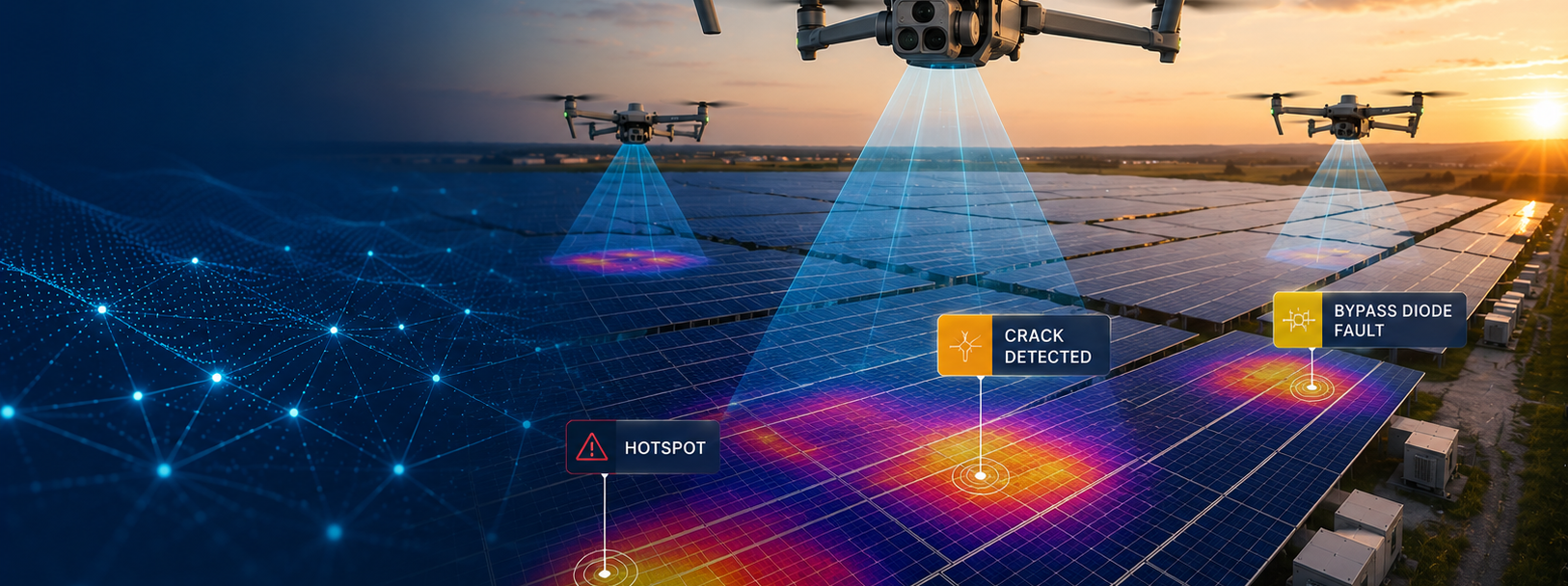


As solar portfolios continue to grow and margins become harder to protect, the traditional outsourced model for inspections is reaching its operational and financial limits. High-cost, low-frequency inspection cycles often result in weeks-long delays between data capture and action, allowing yield-impacting issues to persist unnoticed and reducing overall asset performance.
At the same time, advances in autonomy, AI, and multi-drone operations are making it easier than ever to build agile, in-house inspection programs. By enabling existing field teams to capture more data, more frequently, with minimal training, autonomous operations are changing the economics of solar inspections.
Join GlobalData and industry leaders as we explore what this shift means for the future of solar operations, from reducing OPEX and accelerating time-to-insight to improving portfolio visibility, asset performance, and long-term value.
Key Learning Objectives
- The Economics of Insourcing
A data-backed breakdown of the transition from outsourced inspection cycles to agile, high-frequency in-house operations—and how autonomous workflows can help reduce OPEX while improving operational efficiency. - Overcoming the Training Bottleneck
How automation removes the operational friction of drone deployment, allowing existing field crews—not specialized pilots—to capture high-quality inspection data with minimal training. - Collapsing the Time-to-Insight Loop
How AI-powered analytics replace manual data sorting, compressing the path from inspection to actionable insights from weeks to just 48 hours. - Portfolio-Scale Optimization
How digital twins provide a centralized source of truth across growing solar portfolios, helping operators improve asset visibility, prioritize maintenance, track long-term degradation, and make smarter operational decisions at scale.
 Register
 Back
Back