

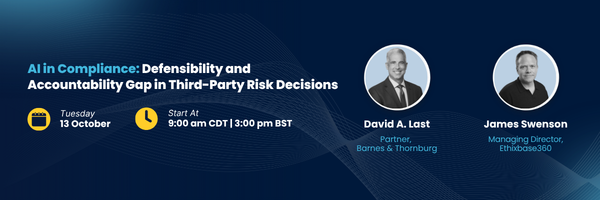
As AI becomes increasingly embedded into third-party due diligence workflows, compliance teams are under growing pressure to move faster, manage larger datasets, and identify risks more efficiently. But while AI can accelerate screening, monitoring, and research, it does not eliminate accountability.
Regulators will still expect organizations to explain how decisions were made, what data was relied upon, whether outputs were validated, and who ultimately exercised judgment. In other words, compliance officers may soon need to defend not only their due diligence decisions, but also the AI-generated insights that informed them.
This session will explore where AI can meaningfully enhance third-party risk management, where human oversight remains essential, and what a “defensible” AI-enabled due diligence program actually looks like in practice.
Topics will include:
- Where AI can improve efficiency in third-party screening, monitoring, and risk assessment
- The limitations of AI-generated outputs, including hallucinations, incomplete context, and unverifiable sourcing
- Why human accountability remains central to compliance decision-making
- Regulatory and enforcement expectations around explainability, governance, and oversight
- Practical approaches to validating AI-generated risk insights and documenting decision-making
- How organizations can balance automation with defensible compliance processes
